Cloud ERP software has transformed how modern businesses manage operations, finances, supply chains, and customer relationships. Instead of relying on expensive on-premise infrastructure, organizations now choose cloud ERP software to gain flexibility, scalability, and real-time visibility across departments.
Understanding Cloud ERP Software
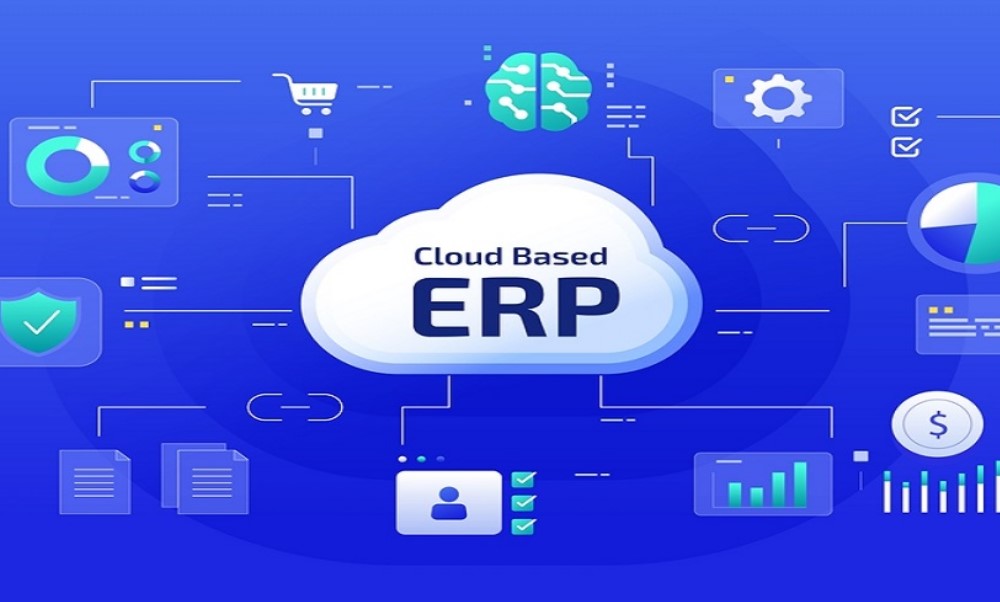
What Cloud ERP Software Means for Businesses
Cloud ERP software is an enterprise resource planning system hosted on cloud infrastructure and accessed through the internet. Unlike traditional ERP systems installed on local servers, cloud ERP software operates on a subscription model, allowing businesses to pay only for what they use.
This approach eliminates the need for heavy upfront investments in hardware and IT maintenance. Businesses can access their ERP system anytime, anywhere, making cloud ERP software ideal for remote teams, global operations, and fast-growing organizations.
How Cloud ERP Software Works
Cloud ERP software integrates core business functions such as finance, human resources, inventory, procurement, manufacturing, and customer management into a single centralized platform. Data flows seamlessly between departments, reducing errors and improving efficiency.
The cloud provider manages security, updates, backups, and system availability. This ensures businesses always use the latest version of the software without worrying about downtime or manual upgrades.
Why Businesses Are Moving to Cloud ERP Software
Businesses worldwide are increasingly adopting cloud ERP software to improve efficiency, reduce costs, and support long-term growth. Below are the key reasons driving this transition, explained clearly with focused points.
Centralized Business Operations
- Cloud ERP software integrates finance, human resources, inventory, sales, and procurement into one unified system.
- This centralization eliminates data silos and reduces manual data entry across departments.
- Teams can access the same real-time information, improving collaboration and operational accuracy.
By using a single source of truth, businesses can streamline workflows and avoid costly errors caused by inconsistent data.
Lower IT and Infrastructure Costs
- Traditional ERP systems require expensive servers, licenses, and ongoing maintenance.
- Cloud ERP software operates on a subscription-based model, reducing upfront capital investment.
- Software updates, system maintenance, and security are handled by the provider.
This cost-efficient structure allows businesses to allocate resources to growth initiatives rather than IT management.
Scalability for Business Growth
- Cloud ERP software scales easily as businesses expand.
- Companies can add users, modules, or features without replacing the entire system.
- The platform adapts to increased transaction volumes and new business locations.
This flexibility ensures that cloud ERP software supports both current operations and future growth plans.
Remote Accessibility and Workforce Flexibility
- Cloud ERP software is accessible from anywhere with an internet connection.
- Employees and managers can securely access the system using laptops, tablets, or mobile devices.
- This supports remote work, multi-location teams, and global operations.
Businesses benefit from uninterrupted operations and improved productivity, regardless of location.
Enhanced Data Security and Compliance
- Cloud ERP providers implement advanced security measures such as encryption and access controls.
- Regular security updates and audits help protect sensitive business data.
- Built-in compliance tools support regulatory requirements and audit readiness.
For many organizations, cloud ERP software offers stronger data protection than in-house systems.
Faster and Better Decision-Making
- Cloud ERP software provides real-time dashboards and analytics.
- Business leaders gain immediate visibility into financial performance and operational metrics.
- Accurate insights enable faster, more informed strategic decisions.
This data-driven approach helps organizations respond quickly to market changes and opportunities.
Improved System Reliability and Performance
- Cloud ERP platforms offer high system availability with minimal downtime.
- Automatic backups and disaster recovery features ensure business continuity.
- Performance remains consistent even during peak usage periods.
As a result, businesses can rely on cloud ERP software to support critical operations without disruption.
Core Features of Cloud ERP Software
Cloud ERP software is designed to bring all essential business processes into a single, intelligent platform. These systems help organizations manage daily operations more efficiently while supporting long-term growth and digital transformation. Below are the core features of cloud ERP software, explained with clear points for better understanding.
Financial Management and Accounting
- General ledger, accounts payable, and accounts receivable management
- Automated invoicing, billing, and payment processing
- Budgeting, forecasting, and financial reporting tools
- Multi-currency and multi-entity accounting support
Cloud ERP software simplifies financial operations by automating routine tasks and reducing manual errors. Real-time financial data allows businesses to track cash flow, monitor profitability, and ensure compliance with accounting standards. This feature is essential for maintaining financial transparency and making informed strategic decisions.
Inventory and Supply Chain Management
- Real-time inventory tracking across multiple locations
- Supplier and procurement management
- Demand forecasting and order management
- Warehouse and logistics optimization
With cloud ERP software, businesses gain complete visibility into their supply chain. Accurate inventory data helps reduce overstocking and stockouts, while automated procurement processes improve supplier relationships. This feature is especially valuable for retail, manufacturing, and distribution companies.
Human Resources and Payroll Management
- Employee records and workforce management
- Payroll processing and tax calculations
- Leave management and attendance tracking
- Employee self-service portals
Cloud ERP software streamlines HR operations by centralizing employee data and automating payroll tasks. This reduces administrative workload and ensures compliance with labor regulations. Employees benefit from easy access to personal information, improving engagement and satisfaction.
Customer Relationship Management Integration
- Centralized customer data and interaction history
- Sales pipeline and opportunity tracking
- Order and invoice visibility for customer accounts
- Customer service and support management
By integrating CRM functionality, cloud ERP software enables businesses to manage customer relationships more effectively. Sales, finance, and support teams work from the same data, improving customer experience and increasing sales efficiency.
Reporting, Analytics, and Business Intelligence
- Real-time dashboards and performance metrics
- Customizable reports for different departments
- Data-driven insights for strategic planning
- Predictive analytics and trend analysis
Cloud ERP software provides advanced analytics that help leaders understand business performance at a glance. These insights support faster decision-making, risk management, and continuous improvement across the organization.
Automation and Workflow Management
- Automated approvals and task routing
- Custom workflows for business processes
- Reduction of manual data entry and repetitive tasks
- Improved process consistency and efficiency
Automation is a key strength of cloud ERP software. By standardizing workflows, businesses reduce errors, improve productivity, and ensure processes are followed consistently across departments.
Security, Compliance, and System Management
- Data encryption and role-based access controls
- Regular system updates and security patches
- Backup and disaster recovery features
- Compliance support for industry regulations
Cloud ERP software providers manage system security and compliance, allowing businesses to focus on operations rather than IT risks. This ensures data protection and system reliability at all times.
Cost Efficiency and Predictable Pricing
One of the biggest benefits of cloud ERP software is cost savings. Businesses avoid large upfront investments and instead pay a monthly or annual subscription. This predictable pricing model helps with budgeting and cash flow management.
IT maintenance costs are significantly reduced because the provider handles infrastructure, updates, and security.
Improved Accessibility and Remote Work Support
Cloud ERP software can be accessed from any device with an internet connection. This supports remote work, multi-location operations, and real-time collaboration between teams.
Managers can monitor performance, approve transactions, and access reports even while traveling.
Enhanced Security and Data Protection
Reputable cloud ERP software providers invest heavily in security, including data encryption, access controls, regular audits, and disaster recovery systems. This often exceeds the security capabilities of in-house IT teams.
Businesses benefit from enterprise-grade security without managing it themselves.
Real-World Cloud ERP Software Products
SAP S/4HANA Cloud
SAP S/4HANA Cloud is a powerful cloud ERP software designed for large enterprises and global organizations. It offers advanced financial management, supply chain optimization, and real-time analytics.
SAP S/4HANA Cloud is ideal for companies with complex operations that require deep customization and global compliance.
Pros:
Strong analytics and reporting, global scalability, industry-specific modules
Cons:
Higher cost, longer implementation time
Price:
Custom pricing based on users and modules, typically premium tier
Best Use Case:
Large enterprises with complex financial and supply chain requirements
Where to Buy:
Get SAP S/4HANA Cloud
Oracle NetSuite ERP
Oracle NetSuite ERP is one of the most popular cloud ERP software solutions for mid-sized and fast-growing businesses. It provides finance, CRM, inventory, and e-commerce capabilities in one platform.
NetSuite is known for its ease of use, strong financial features, and rapid deployment.
Pros:
All-in-one platform, strong financial controls, scalable
Cons:
Pricing can increase as users and modules grow
Price:
Starts around a base license plus per-user fees
Best Use Case:
Growing businesses needing fast implementation and flexibility
Where to Buy:
Buy Oracle NetSuite ERP
Microsoft Dynamics 365 Business Central
Microsoft Dynamics 365 Business Central is a cloud ERP software designed for small and mid-sized businesses. It integrates seamlessly with Microsoft 365, Excel, and Power BI.
This solution is ideal for companies already using Microsoft products.
Pros:
Strong Microsoft integration, user-friendly interface
Cons:
Limited advanced manufacturing features
Price:
Subscription-based, typically lower than enterprise ERP solutions
Best Use Case:
SMBs looking for affordable cloud ERP software
Where to Buy:
Get Microsoft Dynamics 365
Odoo Enterprise Cloud
Odoo Enterprise Cloud is a modular cloud ERP software offering flexibility and customization. Businesses can choose only the modules they need, such as accounting, inventory, CRM, or HR.
It is suitable for startups and small businesses with evolving needs.
Pros:
Modular, affordable, customizable
Cons:
Advanced features may require technical setup
Price:
Lower subscription cost compared to enterprise solutions
Best Use Case:
Startups and SMEs seeking flexible ERP
Where to Buy:
Buy Odoo Enterprise
Acumatica Cloud ERP
Acumatica Cloud ERP focuses on usability and unlimited user pricing. It is popular among manufacturing, distribution, and construction businesses.
Acumatica provides robust reporting and industry-specific features.
Pros:
Unlimited users, industry-focused solutions
Cons:
Smaller ecosystem compared to SAP or Oracle
Price:
Resource-based pricing model
Best Use Case:
Mid-sized companies with multiple users
Where to Buy:
Get Acumatica Cloud ERP
Cloud ERP Software Comparison by Use Case
Small Businesses and Startups
For small businesses, cloud ERP software like Odoo Enterprise and Microsoft Dynamics 365 Business Central offer affordability, ease of use, and faster implementation.
They solve problems related to manual accounting, inventory tracking, and basic HR management.
Mid-Sized and Growing Companies
Oracle NetSuite and Acumatica Cloud ERP are ideal for scaling companies. They provide stronger financial controls, automation, and multi-entity support.
These solutions help manage growth, improve forecasting, and support multi-location operations.
Large Enterprises
SAP S/4HANA Cloud is best for enterprises with global operations, regulatory requirements, and complex supply chains.
It addresses challenges related to compliance, advanced analytics, and enterprise-wide visibility.
How Cloud ERP Software Solves Business Problems
Cloud ERP software is designed to address many of the operational and strategic challenges that modern businesses face. By providing a centralized, cloud-based platform, it helps organizations improve efficiency, visibility, and control across all departments.
Eliminating Data Silos and Inconsistencies
Many businesses struggle with disconnected systems that store data separately in finance, sales, inventory, and human resources. This creates inconsistencies, duplicate entries, and reporting errors. Cloud ERP software solves this problem by integrating all business functions into one unified system. Data is updated in real time and shared across departments, ensuring everyone works with accurate and consistent information. This integration improves collaboration and reduces the risk of costly mistakes caused by outdated or incorrect data.
Improving Real-Time Visibility and Reporting
Lack of timely insights is a major obstacle to effective decision-making. Traditional systems often rely on manual reports that are slow to generate and quickly become outdated. Cloud ERP software provides real-time dashboards and analytics that give leaders immediate access to key performance indicators.
Increasing Operational Efficiency Through Automation
Manual processes such as invoicing, order processing, payroll, and approvals consume significant time and resources. Cloud ERP software automates these repetitive tasks using built-in workflows. Automation reduces human error, accelerates processing times, and ensures consistent execution of business processes. As a result, employees can focus on strategic activities that add more value to the organization.
Supporting Business Growth and Scalability
As businesses grow, their operational complexity increases. On-premise systems often struggle to handle expansion without expensive upgrades. Cloud ERP software is inherently scalable, allowing businesses to add users, modules, or new locations with minimal disruption. This flexibility ensures the system continues to support business needs as transaction volumes and operational demands increase.
Enhancing Data Security and Compliance
Protecting sensitive business data is a critical concern. Cloud ERP software providers implement advanced security measures such as encryption, role-based access controls, and regular security updates. These systems also support compliance by maintaining audit trails and accurate records. For many organizations, cloud ERP software offers stronger security and reliability than managing systems internally.
How to Buy Cloud ERP Software
Where to Buy Cloud ERP Software
Cloud ERP software is typically purchased directly from the vendor’s official website or through authorized partners. Buying directly ensures access to official support, updates, and security patches.
How to Choose the Right Cloud ERP Software
Businesses should evaluate their size, industry, budget, and growth plans. Request demos, compare features, and assess scalability before purchasing.
Pricing and Subscription Models
Most cloud ERP software uses subscription pricing based on users, modules, or usage. Prices vary widely, from affordable SMB solutions to premium enterprise platforms.
Frequently Asked Questions
What is the best cloud ERP software for small businesses?
For small businesses, Microsoft Dynamics 365 Business Central and Odoo Enterprise are excellent choices due to affordability, ease of use, and scalability.
Is cloud ERP software secure?
Yes, reputable cloud ERP software providers use advanced security measures such as encryption, access control, and regular audits to protect business data.
How long does it take to implement cloud ERP software?
Implementation time varies from a few weeks for small systems to several months for enterprise solutions, depending on complexity and customization.